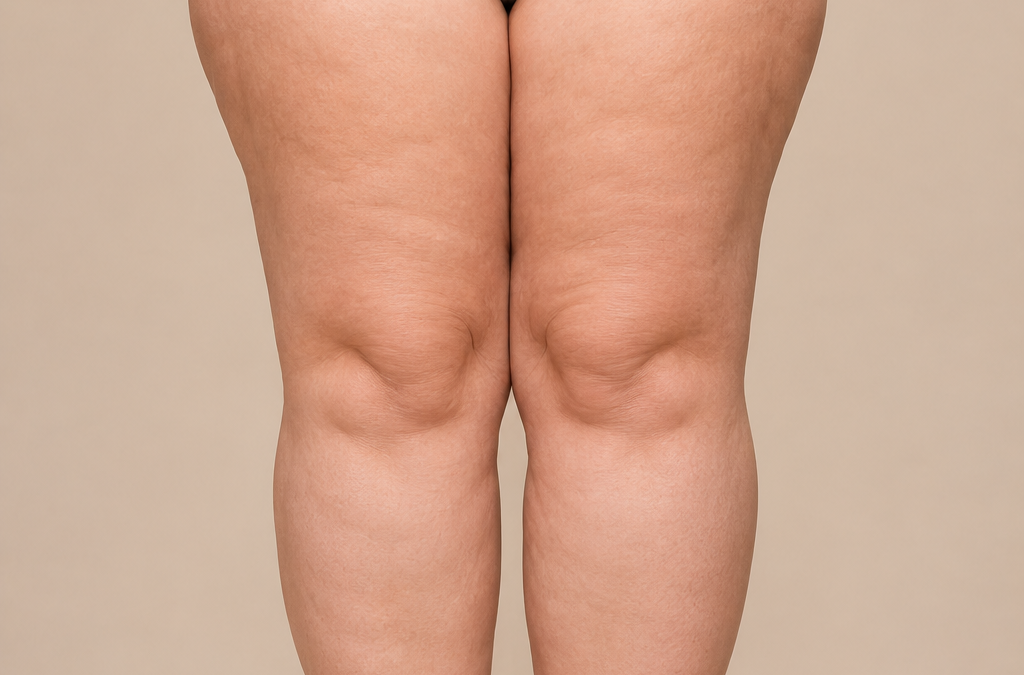
Every June, the world raises its voice for one of the most underdiagnosed women’s health conditions: lipedema. This article is dedicated to every woman who has been told “you just need to diet more” , when the truth is something entirely different.
What is ?
Lipedema is a chronic, progressive disorder of adipose tissue that occurs almost exclusively in women. It is characterized by abnormal, symmetrical accumulation of fat in the legs, thighs, hips, and sometimes arms — while the feet remain unaffected. This distinctive “stopping point” at the ankle is one of the key diagnostic criteria.
Lipedema is not obesity. It is not the result of insufficient willpower. And it does not go away with dieting.
How many women have lipedema?
Recent epidemiological data suggest that up to 18% of women worldwide may have lipedema, with European estimates consistently at 10–12%. Despite this significant prevalence, the majority of cases remain undiagnosed — as the condition is absent from many medical school curricula and is frequently confused with simple obesity or lymphedema.
What are the symptoms of lipedema?
Lipedema typically manifests or worsens during periods of hormonal change: puberty, pregnancy, menopause. Key symptoms include:
- Body disproportion: slim torso with disproportionately heavy legs or arms
- Pain and tenderness: in affected areas, even with light touch
- Easy bruising: without obvious cause
- Feeling of heaviness and fatigue: in the limbs, especially by evening
- Weight-loss resistance: in specific areas, despite proper diet and exercise
- Psychological burden: feelings of shame, social withdrawal, depression
How is lipedema diagnosed?
Diagnosis is clinical and requires evaluation by a specialist plastic surgeon. There is no blood test that “proves” lipedema. It is based on specific criteria: symmetrical distribution, non-response to diet, pain and tenderness, characteristic morphology, and a negative Stemmer sign.
Dr. Dimitrios Daskalakis, Plastic Surgeon in Glyfada, Athens, performs specialized lipedema assessments, providing a comprehensive diagnostic approach and individualized treatment plan. Learn more for lipedema.
What is the surgical treatment for lipedema?
Specialized liposuction is currently the most effective intervention for long-term symptom relief. Techniques such as PAL selectively remove pathological fatty tissue while protecting the lymphatic vessels.
Important: conventional liposuction performed by a non-specialized surgeon can worsen the condition. Surgery for lipedema requires specific expertise in the disease.
Patients consistently report significant pain reduction, improved mobility, decreased sensation of limb heaviness, and restored quality of life. For many patients, surgical intervention is not an aesthetic choice — it is a therapeutic necessity.
June: Lipedema Awareness Month
Every year, June reminds us that behind every statistic there is a woman who deserves to be heard and helped. If you recognize yourself in the symptoms above, do not wait. An early diagnosis can change everything.
Contact Dr. Daskalakis’ practice in Glyfada
References & Documentation
- Lipedema World Alliance Delphi Consensus Group. Lipedema World Alliance Delphi Consensus-Based Position Paper. Nature Communications, 2025. https://doi.org/10.1038/s41467-025-68232-z
- Al-Ghadban S, et al. Unraveling lipedema: comprehensive insights and the path to future discoveries. npj Metabolic Health and Disease, 2025. https://www.nature.com/articles/s44324-025-00093-y
- Liposuction for Lipedema: 2022 Update. Canadian Agency for Drugs and Technologies in Health, 2022. https://www.ncbi.nlm.nih.gov/books/NBK603381/