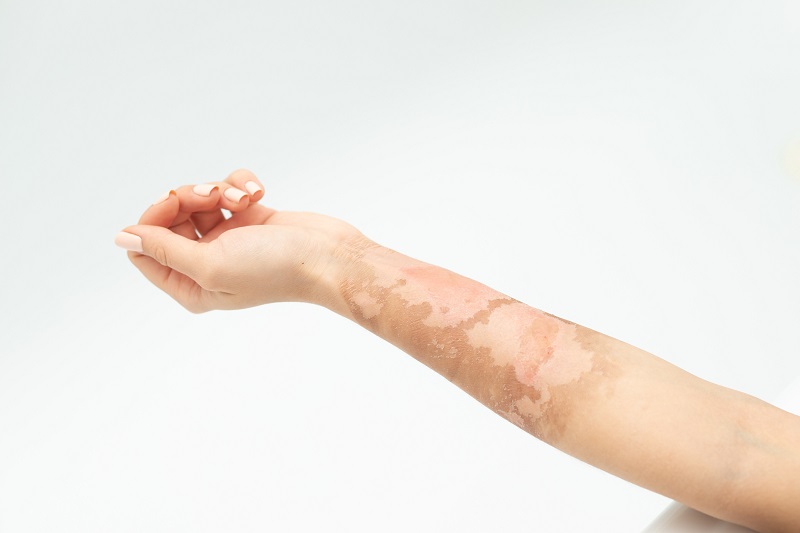
By the term trauma or injury, we mean the total damage to the tissue caused instantly at the moment of the accident by various types of mechanical factors, when these exceed the natural resistance of the tissue and organs.
Injuries are classified as open or closed. One of the most serious forms of trauma is a traumatic amputation. The classification of wounds is varied and depends on the classification criteria.
In general, in isolated accidents or mass disasters, human tissue can suffer damage of varying severity from a wide range of harmful factors, such as a fall, accident, gunshot, thermal injury, crush, etc.
The skin is remarkable! It insulates and protects the body from the external environment. When the skin is injured, the body automatically activates a natural biological process: healing.
Healing in an injury is a complex process of restoration. The body needs to stop bleeding, protect, clean, and close the wound. The injured tissue must be rebuilt, so it resembles and has as much strength as possible as the original tissue.
When the trauma is serious and healing does not occur as it should, intervention is required to restore any functional deficits and, primarily, deformities using the techniques of plastic surgery.
Head and Neck
The head area includes the scalp and the face. These areas, along with the neck, are of utmost importance for the patient’s aesthetic appearance. Most of all, they “host” vital organs for human life and its functions.
The eyes are the organ of sight, the nose is the organ of smell and part of the airway. The mouth serves as the beginning of the gastrointestinal tract, a part of the airway, and allows speech. The ear auricles are an important part of the hearing process. The neck is the area that supports the head, allowing it to rotate in both directions. The trachea and esophagus pass through it, transporting air to the lungs and food to the stomach.
Finally, and no less importantly, the scalp — under which lies the brain, the most vital organ of our body. Should it cease to function, regardless of the state of other organs, the entirety of human life, personality, and consciousness ends as well.
These vital and delicate organs perform critical functions for human life while also serving as essential units for aesthetics. Their functional restoration and subsequent aesthetic improvement are of utmost importance.
Imagine an injury or burn in the area of the mouth that prevents eating or speaking. An exposed brain due to scalp trauma. An obstructed airway in the neck or an inability to turn the head left or right. These conditions are not compatible with life at first, and later, they severely impede basic human functions, leaving the patient with a greatly diminished quality of life.
Plastic surgery aims to restore these conditions — from the simplest to the most complex and challenging — so patients can regain both function and quality of life.
How Wound Restoration Works
Surgeons classify wound healing into primary or secondary intention. Healing by primary intention occurs when the edges of the wound can be brought together and sutured. Healing by secondary intention applies to wounds left open, which heal through granulation and gradual epithelialization. Healing by primary intention is simpler, faster, and requires less tissue generation compared to healing by second intention, which involves repairing a larger tissue volume.
The principles of primary and secondary intention converge in “delayed primary closure” or tertiary intention. In this method, the wound is kept open under carefully managed conditions of moisture and asepsis for approximately five days, after which it is closed.
Restoration Techniques
The basic principle in any surgical technique is to address the defect in the simplest way. If that is not feasible, more complex methods must be used. This has led to the development of the “reconstruction ladder” that covers all types of trauma — from the simplest to the most complex — including:
- Direct suturing of the injury site
- Application of a skin graft
- Use of flaps — pedicled or free
In practice, when direct suturing is not feasible, other methods and surgical approaches must be considered. The most common options are flaps and grafts.
Flap: A portion of tissue taken from a donor area and transferred to the recipient area while preserving its original blood supply.
Graft: Tissue taken from the donor area and transferred to the recipient area, relying on the new site for its blood supply.
Techniques
Several techniques can be used, depending on the defect’s size, location, blood supply, the original tissue’s function, and the patient’s overall health status. One way to categorize flaps is based on the tissue type — such as fat, fascia, or muscle. Examples include dermosubcutaneous, dermofascial, and myocutaneous flaps.
Similarly, free skin grafts can be classified as partial-thickness (including only the epidermis and part of the dermis) or full-thickness (including all layers, taken with a scalpel). Full-thickness grafts can be taken from areas such as the clavicle, groin, or behind the ear, but are limited in quantity and area, and can only be used once. Partial-thickness grafts can be taken from any area of the body with available tissue and used multiple times for complete restoration. The most advanced plastic surgery techniques utilize free flaps, ideal for complex problems that cannot be resolved by other means.
Talk to Your Surgeon
Each case is unique, so it is best to discuss with your surgeon what approach is best for you. Whatever your injury, regardless of its cause or location, we are here to help. Modern plastic surgery can address even the most challenging issues. Our goal is for you to be fully satisfied with the results of the restoration — both aesthetically and functionally. Book an appointment as soon as possible so we can discuss and determine the best personalized approach for your specific situation.
References
- Fan C, et al. (2025). Free flap reconstruction in burns: A systematic review. Microsurgery, (2025), 396 reconstructions – success rate 92.7%-95.7%.
https://pmc.ncbi.nlm.nih.gov/articles/PMC12186291/ - Simman R. (2009). Wound closure and the reconstructive ladder in plastic surgery. Journal of the American College of Certified Wound Specialists, 1(1):6–11.
https://pmc.ncbi.nlm.nih.gov/articles/PMC3478906/ - Jeyaratnam S, Sebastin SJ, Das De S. (2024). Revisiting the reconstructive ladder for soft tissue reconstruction in the lower extremity. Annals of Translational Medicine, 12(1):7.
https://atm.amegroups.org/article/view/117272/html